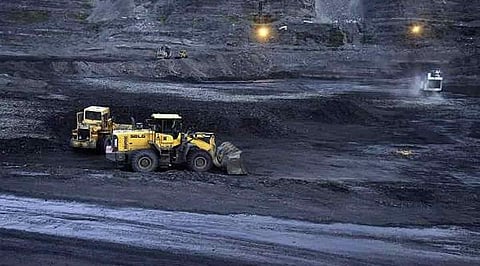

New Delhi: India will be the main source of growth in global coking coal demand this year even as it buys less thermal coal from the seaborne market, the International Energy Agency (IEA) has said. Its mid-year coal update projects India's thermal coal imports falling to around 160 million tonnes (MT) in 2026 from 167 MT in 2025, while demand for coking coal climbs on the back of rising pig iron output.
Follow Energy Watch on X
"India will remain the primary source of growth in metallurgical coal demand, driven by rising pig iron production to meet stronger steel demand," the agency said. It expects most of that additional steel output to come "from the blast furnace-basic oxygen furnace (BF-BOF) production route, which relies on coking coal."
The thermal side is moving the other way. India and Europe are named as the two main sources of decline in seaborne thermal coal demand in 2026. For India, the IEA said imports are projected to fall "as high inventories and efforts to substitute imports with domestic coal weigh on purchases from both utilities and industrial consumers."
The pull in one direction and the push in the other leaves India as the swing factor in two separate global markets at once. Its coking coal buying is what holds up seaborne metallurgical trade, which the agency expects to rise by 16 MT from 304 MT in 2025. Its thermal buying is one of the two things dragging seaborne thermal demand down.
The import forecast sits against a domestic demand picture that turned in 2025 and is expected to turn back this year. India's coal demand fell by 1 percent to 1,299 MT in 2025. The IEA attributes that to the weather. "In India, an early, strong and prolonged monsoon lifted hydropower output while reducing electricity demand for cooling and agriculture and others," the report said. "Coal-fired generation and power-sector coal demand declined as a result, although industrial coal use continued to grow."
The same year saw a first for the two largest consumers. For the first time in 50 years, the agency said, both China and India generated less electricity from coal than the year before.
That reversal is treated as temporary. Coal demand in India "is expected to return to its historical growth trend in 2026, following last year's temporary decline," the report said, with consumption forecast to rise 4.2 percent to 1,353 MT. Rising electricity demand, El Niño conditions that raise cooling needs while cutting hydropower availability, and industrial demand from pig iron, direct reduction of iron (DRI) and cement are listed as the drivers. The agency calls those three the largest coal-consuming sectors in the country.
The growth is expected to carry into next year. India "is expected to remain a major source of coal demand growth in 2027, as rising electricity demand and industrial activity continue to support consumption," the report said.
On supply, the agency expects a record and a constraint in the same year. "India's coal production is expected to set a new record at 1,095 MT in 2026, supported by the government's continued efforts to bolster domestic supply and lower import dependence," the report said, adding that "high pithead inventories, however, have tempered output momentum." Output in 2025 hovered at around 1.1 billion tonnes (BT) for a second consecutive year, and the increase this year is put at more than 1 percent.
Coal India Limited (CIL) accounts for around three-quarters of national production and reported lower figures in May as pithead stocks stayed elevated. Amid that overcapacity, the IEA said, the company has been meeting customer demand by drawing down inventories. Thermal coal imports have fallen in step, particularly among power plants, and the agency reads the auction data as policy working: "Record auction volumes aimed at replacing imported coal underscore the government's commitment to import substitution."
Growth is shifting away from the incumbent producer. Captive and private mines continue to expand output while CIL's growth moderates, and the agency expects the same split in 2027, when India "is projected to set another production record, with growth increasingly driven by captive and commercial mines, while Coal India Limited adjusts its output in line with demand and inventory levels."
India is also one of only two countries the report names, the other is Kazakhstan, where government policy is still expected to support further supply growth.
Globally, coal demand rose 0.3 percent in 2025 to 8.84 BT, a record, and is forecast to rise a further 1.2 percent to 8.94 BT this year. The agency attributes the upward revision largely to higher natural gas prices following the conflict in the Middle East, which has pushed some power systems from gas to coal, along with El Niño.
China's demand was unchanged at 4,956 MT in 2025 and accounts for more than 56 percent of world consumption. Its seaborne thermal coal imports are projected to drop to around 310 MT this year from 325 MT, as it draws on inventories and buys more from Mongolia. Coal demand across ASEAN countries is set to reach around 574 MT, and Korea's coal imports are forecast to rise by more than 10 percent from 2025 amid nuclear outages and higher gas prices.
The domestic-import balance in both large Asian markets stays sensitive to price. "In China — and, to a lesser extent, in India — the balance between domestic and imported coal remains highly price sensitive," the report said, adding that this, with logistical and quality considerations, complicates trade forecasts for both.
The supply side of India's coking coal demand runs largely through Australia, which the IEA expects to remain the dominant exporter of metallurgical coal, shipping more than 150 MT in 2026. Mongolian coking coal exports to China by rail are expected to surge more than 50 percent to around 91 MT after the Shanxi mining accident tightened Chinese domestic supply.
That positioning extends into next year. Stronger Indian import demand, "driven by expanding steel production and limited domestic supplies of high-quality coking coal," is expected to offset weaker demand in China and other mature economies, the report said, and "Australia, the largest metallurgical coal exporter, is expected to capture most of the resulting increase in export volumes."
On thermal coal, Indonesia is expected to account for the largest export decline, with shipments projected to fall to around 485 MT from 517 MT in 2025. The country has lowered its coal production target to 641 MT.
Prices have climbed from the lows of late 2025. FOB Newcastle thermal coal averaged USD 139 per tonne in June before easing to USD 131 per tonne in August. Indonesian 4,200 kilocalories per kilogramme (kcal/kg) FOB rose from USD 45 per tonne at the start of 2026 to USD 66 per tonne by early August. Hard coking coal FOB Australia reached USD 245 per tonne in July, around 30 percent above 2025 levels.
The agency places all of this well below the 2022 peaks, when prices exceeded USD 400 per tonne.
Follow Energy Watch on LinkedIN
For 2027, India's thermal coal imports are expected to hold broadly steady, "with stronger industrial demand offsetting lower import requirements from the power sector."

