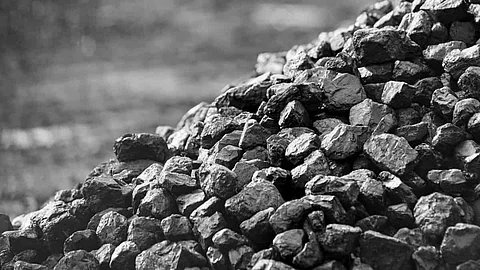

New Delhi: The Ministry of Coal on Thursday said the government has notified coking coal as a “Critical and Strategic Mineral” under the Mines and Minerals (Development and Regulation) Act, 1957, as part of ongoing structural reforms in the mining sector. The ministry said the move is in line with the vision of “Aatmanirbhar Bharat and Viksit Bharat 2047,” and is aimed at strengthening domestic mineral security, particularly for the steel sector.
According to the statement, the decision was taken based on recommendations of the High-Level Committee on Implementation of Viksit Bharat Goals and policy inputs from NITI Aayog, which recognised the “strategic role of coking coal in ensuring mineral security and meeting the requirements of the domestic steel sector.”
India has an estimated 37.37 billion tonnes of coking coal resources, largely located in Jharkhand, with additional reserves in Madhya Pradesh, West Bengal and Chhattisgarh.
Despite domestic availability, the ministry flagged rising import dependence. Imports of coking coal increased from 51.20 million tonnes in 2020–21 to 57.58 million tonnes in 2024–25. Currently, around “95 percent of the coking coal requirement of the steel sector is met through imports,” leading to a significant foreign exchange outgo.
To address this, the Central government has amended the First Schedule of the MMDR Act by exercising powers under Section 11C. As per the notification, in Part A, “Coal” now reads as “Coal, including Coking Coal,” and “Coking Coal” has been included in Part D, which lists critical and strategic minerals.
The ministry said inclusion in this category is expected to “facilitate faster approvals, improve ease of doing business, and accelerate exploration and mining activities, including of deep-seated deposits.”
Mining of critical minerals is exempt from public consultation requirements and allows the use of degraded forest land for compensatory afforestation, steps the government said are expected to encourage greater private sector participation.
Clarifying the revenue framework, the ministry said that under Section 11D(3) of the MMDR Act, “royalty, auction premium, and other statutory payments related to mining leases shall continue to accrue to the respective State Governments,” even when mineral auctions are conducted by the Centre.
Follow Energy Watch on LinkedIN
The reform is expected to reduce import dependence, strengthen supply-chain resilience for the steel sector, support the National Steel Policy, and promote private investment in exploration, beneficiation and advanced mining technologies, while generating employment across the mining and steel value chain.

