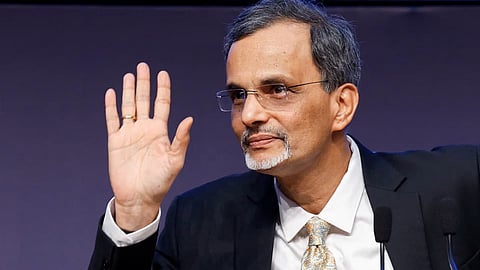

New Delhi: India is squarely focused on shoring up its macroeconomic buffers as the West Asia conflict drives a sharp energy price surge, Chief Economic Advisor (CEA) V Anantha Nageswaran said on Friday. Speaking at an event on securitisation, Nageswaran said the ongoing West Asia conflict had triggered an energy shock, with crude prices climbing on the back of supply disruptions linked to tensions in the Strait of Hormuz. The resulting pressure on India's import bill has brought the current account deficit (CAD) and balance of payments (BoP) to the forefront of policy attention.
Follow Energy Watch on X
"In the current context of having to deal with the energy price, energy shock, current account deficit (CAD) and the balance of payments (BoP), etc. These, therefore, have assumed a much larger priority, urgency at this point," Nageswaran said.
The CEA deliberately steered clear of making any specific recommendations on securitisation policy, stressing instead that financial markets must remain aligned with the pace of activity in the real economy. He drew a pointed parallel to the Global Financial Crisis of 2008, attributing it in part to the outsized focus on complex derivative instruments at the time.
When asked about the Rs 3 lakh annual income ceiling that currently determines microfinance eligibility, Nageswaran pushed back against the use of rigid numerical cutoffs altogether. He argued that income thresholds pegged to a USD 1 trillion economy are no longer appropriate for a country that has grown to over USD 4 trillion, with average incomes rising correspondingly. He said he would prefer a ratio-based approach to defining such thresholds rather than fixed figures.
Follow Energy Watch on LinkedIN
On Priority Sector Lending (PSL), Nageswaran took a broadly positive view, saying the banking industry should be grateful for the mandate, as it was driving higher credit volumes to underserved segments. PSL is a Reserve Bank of India (RBI) directive that requires banks to direct a set percent of their Adjusted Net Bank Credit (ANBC) toward sectors such as agriculture and small businesses.

