

New Delhi: The government has permitted oil refining companies, including petrochemical complexes, to make available specified minimum quantities of C3 and C4 hydrocarbon streams to critical sectors, as supply disruptions ripple through industry.
Follow Energy Watch on X
In an order dated April 1, 2026, the Ministry of Petroleum and Natural Gas said refiners will supply these streams to sectors such as pharmaceuticals, food and public distribution, and chemicals and petrochemicals, based on quantities and refinery sources determined by the Centre for High Technology (CHT).
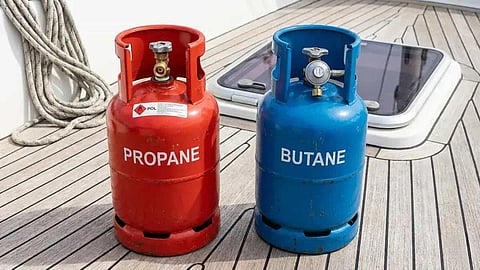
The move follows earlier directions to maximise domestic LPG production after disruptions in imports linked to the West Asia conflict. To meet cooking gas demand, refiners had been instructed to channel the entire output of C3 and C4 streams — including propane, butane, propylene and butenes — towards LPG production, halting their use in petrochemical manufacturing.
This diversion constrained availability of key feedstock such as propylene, affecting industries dependent on petrochemical inputs, including plastics, packaging, and other downstream manufacturing segments.
The reduced availability of petrochemical feedstock disrupted multiple sectors, with shortages impacting packaging materials used in food and beverage supply chains as well as consumer goods manufacturing. Industries reliant on these inputs had flagged operational challenges as feedstock flows tightened following the shift towards LPG maximisation.
Explaining the decision, Sujata Sharma, Joint Secretary in the Ministry of Petroleum and Natural Gas, said the move was aimed at addressing the needs of sectors beyond cooking gas. “There are certain other sectors which also need some of these molecules and that is why this decision has been taken,” she said at an inter-ministerial briefing on Thursday.
She acknowledged that reallocating feedstock would have implications for LPG availability but maintained that domestic supply remains protected.
“And there will be an impact on the supplies available for domestic consumers. But supplies have been ensured and will be ensured. It will be ensured that supplies to the domestic consumers are not affected,” Sharma said.
The decision comes alongside the government’s move to grant customs duty exemptions on select petrochemical imports to ease supply pressures.
At the same time, the government has been calibrating commercial LPG allocations to balance demand from industry and services, while prioritising domestic household consumption.
Follow Energy Watch on LinkedIN
The latest directive signals a shift towards restoring partial feedstock flows to petrochemical industries, even as the government continues to manage energy supply disruptions stemming from the West Asia crisis.
