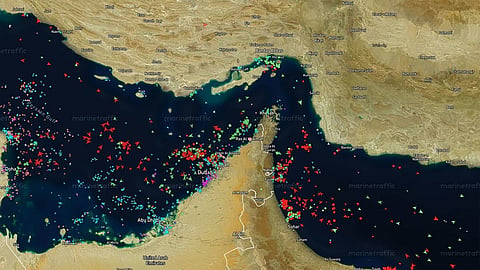

New Delhi: Vessels from India can now move through the Strait of Hormuz without facing Iran’s restrictions on commercial shipping, according to a senior Iranian lawmaker. China, Iraq and Qatar have received the same exemption. The move could ease some of the pressure on maritime trade disrupted by the conflict in West Asia. It was announced, however, while attacks on commercial vessels in the region continued, and that leaves open whether the exemptions can secure safe passage through one of the world’s most strategically important energy shipping routes.
Follow Energy Watch on X
Amir Hayat Moghadam, Deputy Chairman of the Iranian Parliament’s National Security and Foreign Policy Committee, named the four countries in an interview with the semi-official Iranian Students’ News Agency (ISNA), published on Tuesday. “We have currently exempted four countries - India, China, Iraq and Qatar - from transit restrictions in the Strait of Hormuz. Ships from these countries pass freely, and the Americans do not intercept them either,” he was quoted as saying.
The assurance that US forces would not stop these vessels came from Moghadam. It has not been confirmed as an arrangement with Washington.
Strategic considerations and mutual interests guided the exemptions, Moghadam said. Iran’s need to import medicines from India was the reason for easing passage for Indian shipping, according to him. The exemption for Chinese vessels was aimed at securing Beijing’s political support, he said.
The exemption does not make passage free. Tehran is still collecting transit fees from Indian and Chinese ships, while Qatari vessels are reportedly allowed through without charges. It was not clear from the interview whether Iraqi vessels would also have to pay. Being exempt from the restrictions, in other words, is not the same as unrestricted, cost-free passage.
The risk to commercial shipping came into focus again on Monday. An Indian seafarer was killed when the commercial vessel MSV Al Jusufi was attacked near Limah in Oman. He was identified as Gandhar Nahim Ajij, from Gujarat. The Omani Coast Guard rescued the 13 other Indian crew members on board.
Union Shipping Minister Sarbananda Sonowal said Indian authorities were working with Oman to help the survivors and arrange their repatriation.
An exemption from Iran’s transit restrictions does not by itself guarantee safe navigation while commercial vessels remain exposed to military activity and attacks in the region.
For Indian shipping interests and energy importers, the exemption could bring some relief, given India’s reliance on sea routes through the Persian Gulf. About 30 percent of India’s crude oil imports, 90 percent of its liquefied petroleum gas (LPG) imports and more than half of its liquefied natural gas (LNG) imports pass through the waterway, according to figures reported on Wednesday.
India has spread its crude oil purchases across more suppliers, which has reduced its dependence on cargoes routed through Hormuz. The strait still matters most for LPG and LNG supplies from Gulf producers.
The Strait of Hormuz links the Persian Gulf with the Gulf of Oman. In normal times it carries roughly one-fifth of global oil consumption, along with substantial volumes of LNG. Any disruption there affects crude oil prices, shipping costs, insurance premiums and energy security, and it hits major Asian importers such as India and China hardest.
Traffic through the strait has been severely disrupted since February 28. On that day the United States and Israel launched military strikes against Iran, which led to retaliatory attacks and restrictions on maritime traffic.
India has repeatedly called for dialogue and diplomacy to end the conflict. It has demanded an immediate halt to attacks on commercial shipping and civilian infrastructure. New Delhi has also insisted that freedom of navigation and international commerce be restored in line with international law.
Follow Energy Watch on LinkedIN
Iran’s exemption gives India a potentially important diplomatic and commercial opening. How much it helps in practice will depend on whether ships can actually cross the waterway safely, free of arbitrary restrictions, excessive charges or the continuing threat of military attack.
