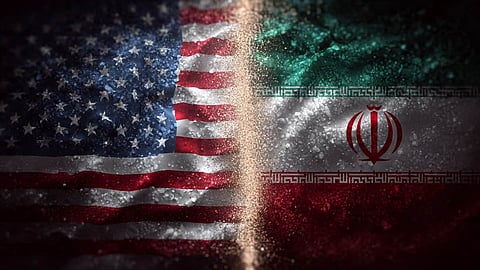

New Delhi: The Strait of Hormuz has been reopened to commercial shipping, according to statements from the United States (US) and Iran, as a fragile ceasefire in Lebanon appeared to hold — developments that have eased fears of supply disruption and pushed global crude oil prices lower. US President Donald Trump said in a social media post that Iran had indicated the strait “is fully open and ready for full passage.”
Follow Energy Watch on X
Minutes earlier, Iranian Foreign Minister Abbas Araghchi said on X that passage for all commercial vessels through the strait “is declared completely open” in line with the ceasefire, adding that it would remain so for the duration of the truce.
The reopening of the critical oil transit route, through which a significant share of global crude flows, has reduced immediate supply concerns. Latest market reports indicate crude prices have declined sharply, with Brent and WTI both retreating as traders unwind risk premiums tied to the disruption threat.
The 10-day truce between Israel and Hezbollah has provided a pause in hostilities and could remove a key obstacle to broader negotiations involving Iran, the United States and Israel. However, uncertainty remains over whether Hezbollah would accept a deal it was not directly involved in negotiating, particularly as Israeli forces continue to occupy parts of southern Lebanon.
Trump described the development as a “historic day for Lebanon,” and said in a speech, “I will say the war in Iran is going along swimmingly… It should be ending pretty soon.”
Despite the truce, the situation on the ground remains tense. Celebratory gunfire was reported across Beirut shortly after midnight as the ceasefire took effect, while displaced families began returning to southern Lebanon and the capital’s southern suburbs despite official warnings.
A spokesperson for UN peacekeepers said no airstrikes had been observed since midnight, but accused Israeli forces of airspace violations and artillery shelling in southern Lebanon. There was no immediate response from the Israeli military.
Under the terms shared by the US State Department, Israel may act in self-defence against imminent threats but is restricted from launching offensive operations in southern Lebanon. Israeli Defence Minister Israel Katz said efforts to fully disarm Hezbollah are “not yet complete,” adding that Israeli forces would remain in their current positions, including a buffer zone extending 10 km into southern Lebanon.
Prime Minister Benjamin Netanyahu said he had agreed to the ceasefire “to advance” peace efforts, but also made clear that Israeli troops would not withdraw at this stage.
While Trump framed the agreement as a ceasefire between Israel and Lebanon, a Hezbollah official said it emerged from negotiations between the US and Iran. The official spoke on the condition of anonymity, news agency AP reported.
Iran had earlier insisted that ending Israel’s war with Hezbollah was a key condition in broader negotiations, while accusing Israel of violating previous ceasefire arrangements—claims that Israel has rejected.
The conflict has resulted in significant casualties across the region. According to AP, at least 3,000 people have been killed in Iran, more than 2,100 in Lebanon, 23 in Israel, and over a dozen in Gulf Arab states. Thirteen US service members have also been killed.
Follow Energy Watch on LinkedIN
The reopening of Hormuz and the ceasefire have had an immediate impact on energy markets, with crude prices falling as fears of prolonged supply disruption ease.
However, analysts caution that the situation remains fluid, with uncertainty over the durability of the truce, the status of blockades, and the broader geopolitical trajectory likely to keep oil markets volatile in the near term.

