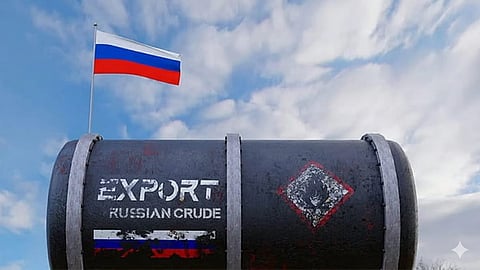

New Delhi: The United States (US) has urged India to purchase Russian crude cargoes already at sea and redirect them to Indian refineries in a move aimed at easing fears of supply shortages and price spikes amid the ongoing West Asia conflict. US Energy Secretary Chris Wright said Washington had discussed the proposal with Indian authorities as part of efforts to stabilise oil markets during the conflict.
Follow Energy Watch on X
“India has been a great partner through this. I did call up the Indians, as did Treasury Secretary (Scott) Bessent, and said there’s a whole bunch of oil floating waiting to unload at Chinese refineries,” Wright said in an interview with CNN on March 8.
“Instead of having it wait six weeks to unload there, let’s just pull that oil forward, have it land in Indian refineries and tamp this fear of shortage of oil, tamp the price spikes and the concerns we see in the marketplace,” he said.
Wright emphasised that the move was a temporary step to stabilise markets and did not signal any shift in Washington’s approach towards Moscow. When asked whether a US waiver allowing Indian refiners to purchase Russian oil undermined the Trump administration’s goal of isolating Russia, he said, “It is not.”
“It’s just a pragmatic effort that has a short time span. No change in policy towards Russia,” Wright said, adding that “India is very clear on that.”
He also said India had “displaced” Russian crude imports and was increasing purchases from the United States, Venezuela and other suppliers.
The US Treasury Department has issued a temporary licence allowing Indian entities to receive Russian oil cargoes that were already loaded on vessels before sanctions tightened. According to the Treasury statement, the authorisation permits transactions necessary for the “sale, delivery or offloading of crude oil or petroleum products of Russian origin loaded on vessels on or before 12:01 am eastern standard time on March 5.”
The licence remains valid until 12:01 am eastern daylight time on April 4, provided the delivery or offloading occurs at a port in India and the purchaser is an entity organised under Indian law.
The authorisation does not permit transactions involving Iran or Iranian-origin goods or services that remain restricted under existing US sanctions regulations.
US Ambassador to the United Nations Mike Waltz defended the decision, describing it as a short-term step to address supply disruptions during the conflict. “I have to push back on that premise... It's a 30-day pause to allow the millions and millions of barrels of oil that are sitting out on ships to go to Indian refineries,” Waltz said in an interview with NBC News on March 8.
“But at the end of the day, this is going to be a temporary issue. This looks like a bit of short-term pain for the long-term gain of Iran no longer being able to hold the world's energy supplies hostage. We have taken out that capability,” he said.
Treasury Secretary Scott Bessent said the temporary measure was intended to ease tightness in the global oil market during the conflict. “The world is very well supplied with oil. Yesterday, the Treasury (Department) agreed to let our allies in India start buying Russian oil that was already on the water,” Bessent said in an interview with Fox Business on Friday.
“The Indians had been very good actors. We had asked them to stop buying sanctioned Russian oil this fall. They did. They were going to substitute it with US oil. But to ease the temporary gap of oil around the world, we have given them permission to accept the Russian oil. We may unsanction other Russian oil,” he said.
Follow Energy Watch on LinkedIN
Bessent added that there are “hundreds of millions of barrels” of sanctioned crude currently at sea and that allowing these cargoes to be delivered could effectively increase available supply.
“We are going to keep a cadence of announcing measures to bring relief to the market during this conflict,” he said.

