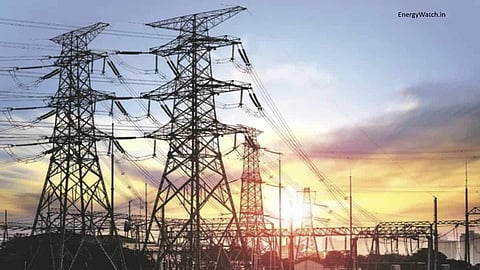

New Delhi: Adani Energy Solutions Ltd (AESL) said on Monday that it has secured long-term financing from a consortium of Japanese banks for its 950 km Bhadla–Fatehpur high-voltage direct current (HVDC) transmission project aimed at evacuating renewable energy.
Follow Energy Watch on X
The company said the project will play a central role in evacuating green power from Rajasthan’s solar-rich regions and feeding it into India’s national grid, supporting the country’s growing clean electricity demand.
Configured as a high-capacity ±800 kV HVDC network with an evacuation capacity of 6,000 MW, the transmission corridor will connect Bhadla in Rajasthan to Fatehpur in Uttar Pradesh.
Scheduled for commissioning by 2029, the link is expected to emerge as a critical green transmission artery, enabling large-scale renewable energy integration while strengthening grid stability for energy-intensive urban and industrial centres.
Rajasthan continues to be a key generation hub for Adani Green Energy, whose projects already supply clean power to AESL’s subsidiary, Adani Electricity Mumbai Ltd (AEML).
AEML currently integrates more than 40 percent renewable energy into its supply mix, placing Mumbai among the world’s largest cities with significant sustainable power penetration.
The financing is led by Japanese banking partners MUFG Bank Ltd and Sumitomo Mitsui Banking Corporation (SMBC), which the company said reflects continued international confidence in India’s renewable infrastructure build-out.
The project is also supported by advanced HVDC technology from Hitachi, delivered in collaboration with Bharat Heavy Electricals Ltd (BHEL).
AESL said these partnerships underline Japan’s leadership in critical transmission technologies and align with India’s push to strengthen domestic manufacturing under its Make in India programme.
The deepening India–Japan financial and industrial engagement is also reflected in AESL’s recent BBB+ (Stable) credit rating from Japanese agency Japan Credit Rating Agency, which is aligned with India’s sovereign rating.
“The continued support from our Japanese partners — including leading banks and Hitachi — reflects the depth of the India-Japan partnership and our shared commitment to enabling a sustainable energy future,” Kandarp Patel, CEO of AESL, said.
Follow Energy Watch on LinkedIN
Latham & Watkins and Saraf & Partners acted as borrower’s counsel, while Linklaters and Cyril Amarchand Mangaldas advised the lenders on the transaction.

