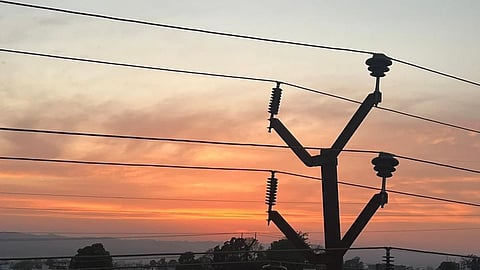


New Delhi: Defending its proposal to allow multiple DISCOMs in the same area, the government on Monday said the draft Electricity (Amendment) Bill, 2025 is aimed at cutting infrastructure duplication without weakening consumer protections. “The Electricity Act, 2003 already allows multiple distribution licensee in the same area,” Minister of State for Power Shripad Yesso Naik said in a written reply in the Rajya Sabha. However, he said the current framework forces every new licensee to build its own network, resulting in “duplication of poles, wires, and substations – making power costlier for everyone”.
Follow Energy Watch on X
Naik said the proposed amendment seeks to address this inefficiency by allowing a distribution licensee to use another licensee’s network. “The proposed amendment under draft Electricity (Amendment) Bill, 2025 intends to remove this wasteful duplication by allowing use of other distribution licensee’s network upon payment of charges decided by the State Electricity Regulatory Commission,” he told the Upper House.
According to the minister, the framework is designed to lower system costs without diluting regulatory oversight.
Responding to concerns that private players could prioritise commercial consumers, Naik said the Bill does not dilute service obligations. “Every distribution licensee, whether public or private, will continue to have a Universal Service Obligation for all the consumers including the rural and domestic consumers,” he said.
He added that distribution licensees will have “a duty to supply electricity to all consumers in its area of supply, without discrimination”, except for large consumers where specific exemptions are granted by regulators.
Naik said areas of supply for distribution licensees continue to be approved by state electricity regulatory commissions (SERCs), with subordinate legislation already prescribing minimum geographical areas.
He added that the proposed amendment mandates SERCs to “establish a clear framework for introducing multiple licensees within the same supply area, ensuring transparency and fairness”.
Addressing concerns over farm and household consumers, particularly in states that provide free power for agriculture, Naik said the government does not expect adverse outcomes.
“It is envisaged that there would not be any adverse impact on agricultural and domestic consumers, rather, the competition will improve quality of service,” he said.
Follow Energy Watch on LinkedIN
He also clarified that “the subsidies for specified consumer categories including agricultural and domestic consumers may continue to be provided by the State Government under Section 65 of the Act.”
