

New Delhi: India's electricity grid set yet another all-time peak on Tuesday afternoon, with demand touching 260.45 GW during solar hours, the third record in less than four weeks and the second in two days, as a sweltering heatwave across the northern and central plains kept cooling loads at unprecedented levels.
Follow Energy Watch on X
The Ministry of Power confirmed said in a post on X, "Today, the peak power demand (solar hours) of 260.45 GW was met succesfully at 15:40 hrs. This is a new high surpassing yesterday's peak demand (solar hours) of 257.37 GW which was also successfully met."
Union Power Minister Manohar Lal Khattar's office summed up the streak in a separate post: "India continues to scale new energy milestones with record peak demands of 256.1 GW on 25th April 2026, 257.37 GW on 18th May 2026, and 260.45 GW on 19th May 2026 — all met seamlessly without any shortage."
The April 25 reading of 256.1 GW had itself been called a milestone at the time, surpassing the previous all-time high of 250 GW set in May 2024. That record stood for just 23 days before Monday's 257.37 GW peak.
Recapping Monday's tally earlier in the day, the Power Ministry said on X: "Yesterday (May 18) at 15:42 hours, the peak power demand of 257.37 GW was met without any shortfall. This peak demand was a new high surpassing the previous peak demand of 256.1 GW which was successfully met on April 25, 2026."
The ministry added that the grid had also handled a fresh non-solar record overnight. "Yesterday (May 18), 247.21GW of non solar demand was also met at 22:29 hours. This too was a new high for the demand met for non solar hours. The power availability in the country is sufficient and robust mechanisms are in place to meet the summer demand," it said.
Power Minister Manohar Lal Khattar, in his own post, said: "India recorded an all-time high peak power demand of 257 GW on 18th May 2026 without any shortage during Solar hours."
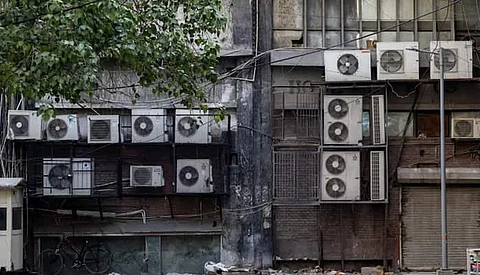
The records are being driven, almost entirely, by cooling demand. The India Meteorological Department (IMD) on May 18 flagged heatwave to severe heatwave conditions across the plains of northwest and central India through the week, with maximum temperatures forecast to climb a further 3-5°C over many parts of the northwest until May 21.
On the ground, Bhatinda in Punjab touched 47°C on Monday, while parts of Haryana and Rajasthan crossed 46°C. Delhi recorded 44°C, with the capital staring at an extended punishing spell and no immediate respite forecast. The IMD has placed Rajasthan under heatwave warning until May 23, with Punjab, Haryana, Chandigarh and Delhi in the same window through May 18-24, and parts of Uttar Pradesh facing heatwave to severe heatwave conditions from May 19. The weather office has projected harsh summers overall and warned that the worst of May and June is still ahead.
The Centre, citing the IMD's above-normal heatwave forecast, has asked states and Union Territories to operationalise dedicated Heat Stroke Management Units at all health facilities and to ensure adequate preparedness of ambulance services through the summer season.
The capital followed the national trend. Delhi's peak demand touched 7,776 MW at 3:30 pm on Tuesday, the highest the city has clocked so far this year, according to State Load Despatch Centre data. Officials estimate Delhi's summer peak could cross 9,000 MW for the first time ever in 2026. The city had crossed the 7,000 MW mark as early as April 27, a threshold that was historically breached only in May or later.
The Power Ministry has projected that India's peak power demand could touch 270 GW this summer, and the latest readings put the system firmly within striking distance. The April 25 record was met through a diverse mix of thermal (around 67 percent), solar (about 22 percent), hydro, nuclear, wind, gas and storage, with grid frequency holding at a clean 50.00 Hz.
Follow Energy Watch on LinkedIN
Capacity additions have helped: roughly 65 GW of new generation was added in FY 2025-26, while electricity consumption grew 8.9 percent year-on-year in April 2026. Industry analysts said demand is likely to keep climbing through May and June as cooling appliance use intensifies, and that the 270 GW summer estimate is now well within range.
