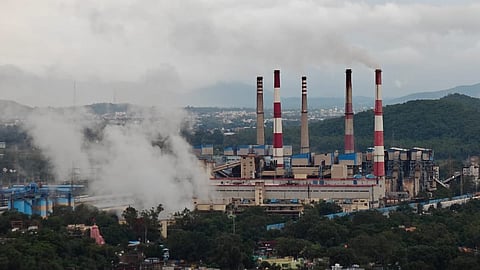


New Delhi: The Ministry of Power has asked states and power distribution companies (discoms) to set realistic construction timelines for new thermal power plants. In an advisory issued on Tuesday, it said they should allow preferably no less than 60 months, or five years, to build and commission such plants. The advisory covers long-term power procurement from plants set up on a Design, Build, Finance, Own and Operate (DBFOO) basis.
Follow Energy Watch on X
The ministry said recent bids had set timelines that were either out of step with state plans or hard to meet. “It has been observed that the delivery schedules/commissioning timelines stipulated by several procurers/DISCOMs in their recent bids issued under the aforesaid bidding framework are not aligned with the respective Resource Adequacy Plans of the States or are difficult to achieve in view of the prevailing domestic manufacturing lead times and constraints relating to Boiler, Turbine and Generator (BTG) equipment,” the advisory said.
The advisory was addressed to the energy and power secretaries of all states and union territories, and to the heads of all discoms.
States and discoms may align delivery schedules and commissioning timelines with their own Resource Adequacy Plans, the ministry said. That flexibility came with a condition. “However, a realistic construction and commissioning period, preferably not less than 60 (sixty) months from the Appointed Date must be prescribed, keeping in view the manufacturing capacity and supply chain constraints of major equipment such as Boiler, Turbine and Generator (BTG),” the advisory said.
The advisory refers to the Model Bidding Documents (MBDs) the ministry issued on March 5, 2019. These govern long-term procurement of power by distribution licensees from DBFOO power stations.
The ministry clarified how the delivery timeline in those documents should be read. The timeline appears in Clause 1.1.1 of both the Request for Qualification (RfQ) and the Request for Proposal (RfP). According to the advisory, it “is project-specific in nature, as indicated by its placement in square brackets in the standard documents.”
Follow Energy Watch on LinkedIN
Procurers therefore have room to change it. “Accordingly, procurers/DISCOMs retain the flexibility to suitably modify the said timelines while issuing bid documents to prospective applicants, based on their respective Resource Adequacy Plans, considering other factors like availability of major equipment,” the advisory said.