
New Delhi: The Association of Power Producers (APP) said on Thursday that several thermal power plants failed to meet biomass co-firing targets in FY 2024–25 primarily due to limited biomass availability and technical constraints, rather than any lack of intent by generators.
Follow Energy Watch on X
The statement follows show-cause notices issued by the Commission for Air Quality Management (CAQM) to six thermal power stations located within a 300-km radius of Delhi, along with a proposal to levy environmental compensation amounting to Rs 61.85 crore for the reported shortfall.
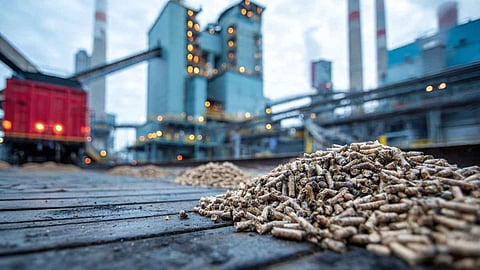
APP said the domestic market for torrefied biomass pellets — a mandatory fuel for plants operating ball and tube mills — remains significantly underdeveloped, constraining compliance.
According to the association, generators continue to face challenges including inadequate supplier capacity, high rejection rates of pellets due to excess moisture or volatile matter, and the lack of original equipment manufacturer (OEM)-validated technical solutions.
Citing Talwandi Sabo Power Ltd (TSPL), a 1,980-MW thermal power station in Punjab, APP said the plant struggled to secure sufficient torrefied biomass despite issuing multiple tenders during FY25.
The association noted that TSPL subsequently supported local partners in setting up a torrefied biomass manufacturing unit near its Mansa plant, helping build a circular stubble-to-biofuel ecosystem in the region.
With better pellet availability, TSPL’s biomass co-firing performance has improved significantly. The plant achieved 4.33 percent co-firing in August of FY26 and reached 5.07 percent on a year-to-date basis by November 30, 2025, after co-firing 2,50,369 metric tonnes of biomass.
APP said the progress demonstrates that compliance improves as the biomass value chain matures, and that earlier shortfalls were the result of market immaturity rather than operational reluctance.
Follow Energy Watch on LinkedIN
The association cautioned that penalising generators for factors beyond their reasonable control under the Environment (Utilisation of Crop Residue by Thermal Power Plants) Rules, 2023 could impose avoidable financial stress without speeding up adoption.
APP urged the government to use provisions allowing relaxation in cases of genuine difficulty, including granting a one-time waiver of environmental compensation for FY25 or permitting the carry-forward of compliance obligations to subsequent years.

