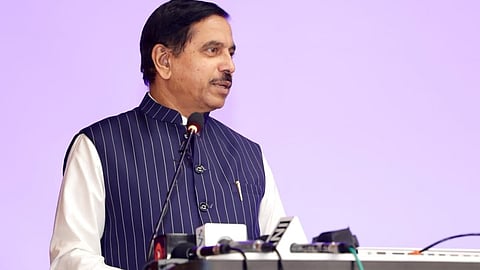

New Delhi: Farmers will be able to generate Renewable Energy (RE) without taking land out of cultivation under the second version of the Pradhan Mantri Kisan Urja Suraksha evam Utthaan Mahabhiyan (PM-KUSUM), Union New and Renewable Energy Minister Pralhad Joshi said on Thursday. The launch is close, he said, and PM-KUSUM 2.0 would set up a new model for decentralised renewable energy generation in rural India.
Follow Energy Watch on X
Joshi was speaking on the sidelines of the curtain-raiser for the 7th Agrivoltaics World Conference 2026. New Delhi hosts the conference from October 21 to 23.
The revamped scheme is expected to carry a dedicated 10 GW agri-photovoltaic (agri-PV) component, an official said. That component is meant to encourage the co-location of solar panels with crops, allowing the same plot to carry generation and cultivation together. The official also said the outlay for PM-KUSUM 2.0 is expected to exceed that of the first version.
The Indo-German Cooperation on Agrivoltaics (IGCA) opened a call for proposals at the same event. It is inviting stakeholders including farmers, farmer organisations, renewable energy developers and public institutions to apply. The support on offer covers technical assistance, viability gap funding and research instrumentation, and extends across different categories of agrivoltaics projects, both those already running and those still planned.
Follow Energy Watch on LinkedIN
PM-KUSUM was launched in 2019 with an outlay of Rs 34,422 crore. It was designed to push renewable energy into the agriculture sector and to cut what farmers spend on irrigation. Attached to it was a capacity target of 34,800 MW of solar, to be added by March this year.

