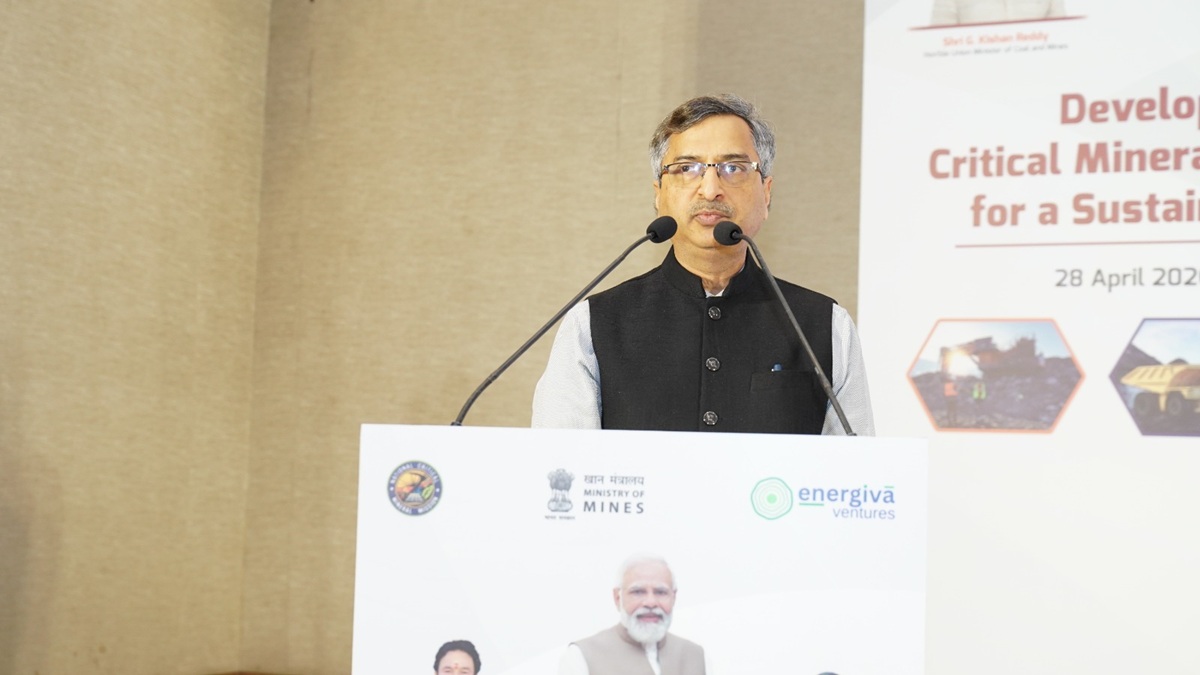

New Delhi: The Centre has selected Odisha, Gujarat, Andhra Pradesh and Maharashtra as locations for four critical mineral processing parks, Mines Secretary Piyush Goyal said on Tuesday, as part of efforts to build a stronger domestic mineral value chain. The projects will be supported by an allocation of Rs 500 crore under the National Critical Mineral Mission (NCMM).
Follow Energy Watch on X
“I am happy to share that we have finalised the location of these parks and in the meeting on April 22, with the offices of the state governments of Maharashtra, Andhra Pradesh, Gujarat and Odisha. We have reviewed the process, and hopefully, very soon we will have this processing parks set up in these states, which will cater to development of processing value chains for many of the critical minerals,” Goyal said.
He later told reporters that the states were chosen due to their port access, which is critical for handling mineral supply chains.
Highlighting a key constraint, Goyal stressed that the absence of a domestic processing ecosystem is a major bottleneck. "Without a processing value chain for critical minerals even if we are able to source critical minerals whether domestically or from abroad we are not in a position to utilise them and they (the mineral) get exported," he said.
He added that building such a value chain is essential to expand capacity and support industries dependent on these minerals, which are critical for clean energy technologies and advanced manufacturing.
The announcements were made alongside a high-level consultative workshop on “Developing the Critical Minerals Value Chain for a Sustainable Future” held in New Delhi, which brought together stakeholders from government, industry, academia and international institutions.
In his keynote address, Goyal emphasised the need for greater private sector participation to accelerate development of the sector. He highlighted the government’s policy push under NCMM and called for reforms, ease of doing business and targeted incentives to build a resilient and self-reliant supply chain.
He noted that critical minerals are central to India’s energy transition, economic growth and technological advancement, and called for faster progress across exploration, processing and recycling.
The workshop highlighted the growing importance of secondary sources such as mine waste, tailings, slags and industrial residues as cost-effective alternatives for critical mineral recovery. Deliberations also underscored the role of urban mining through recycling of e-waste and end-of-life batteries, supported by government incentives.
Experts discussed the need to unlock value from secondary resources, scale emerging technologies and strengthen the recycling ecosystem, while bridging policy, regulatory and technological gaps.
Participants included industry players such as Hindalco, Rubamin, Attero, Lohum, ALTMIN and GMDC, along with global institutions including the World Bank, who shared insights on technological readiness, commercial viability and policy support required to scale recovery efforts.
The discussions also stressed the importance of translating laboratory innovations into industrial-scale solutions and attracting private investment into the sector.
On timelines, Goyal said, “I am very optimistic that by this year-end we will have significant progress in this regard.” He also noted that the government has been engaging with industry stakeholders, including a recent meeting between primary and secondary aluminium players, who shared inputs and concerns related to the sector.
Follow Energy Watch on LinkedIN
The workshop concluded with a consensus on strengthening coordination between government, industry and academia to accelerate pilot projects and scale up proven technologies.
The event saw participation from a wide range of stakeholders, with discussions focusing on building a comprehensive and sustainable critical minerals value chain in India.

