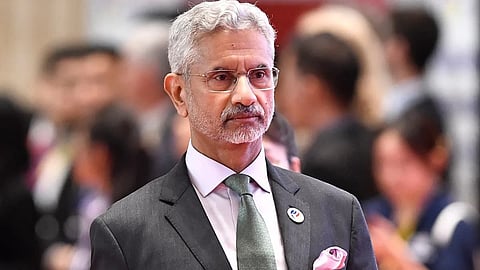

New Delhi: India remains "firmly committed to ensuring energy security for its 1.4 billion people," the Ministry of External Affairs (MEA) said on Thursday. The ministry was responding to the passage of the Sanctioning Russia and Iran Act in the US Congress. The bill allows the US President to impose tariffs of up to 100 percent on the top five buyers of Russian oil or natural gas. The decision impacts India as it is among the largest buyers of Russian crude oil.
Follow Energy Watch on X
The MEA repeated a position it has stated before. India "will continue to do so through diversified sourcing and on the basis of evolving market dynamics," the statement said. The ministry said the government had noted the bill's passage. "We are monitoring further developments on this matter," it said.
The MEA also said the bill has already come up in talks with Washington. "This issue has been discussed at high levels in recent months with various US interlocutors," the statement said. "Its potential implications for not just the bilateral relationship but also the international energy market have been very clearly articulated by the Indian side."
The ministry also signalled that India would move to protect its economy. "The Indian side has also made clear its determination to take all necessary measures to protect its trade and economic interests," the statement said. The government will work closely with Indian trade and industry bodies to deal with the implications, it added.
The Senate passed the bill, formally titled the Lindsey O Graham Sanctioning Russia and Iran Act of 2026, by 86 votes to 11 in August. The House of Representatives cleared it by 262 votes to 159 on Wednesday. The bill now goes to President Donald Trump for his signature.
The tariff provision lets the President target the five largest buyers of Russian oil or gas and countries that help Russia evade sanctions. According to Deseret News, a country comes off the list as soon as it falls out of the top five. The President can also waive the measures by certifying to Congress that doing so is in the US national interest. The bill also targets Russian officials, banks, the energy sector and the "shadow fleet" of tankers used to get around sanctions, and it extends US sanctions on Iran by five years.
India has been named directly in the US debate. "China and India, you better clean up your act, buy your oil and gas somewhere else," Democratic Senator Richard Blumenthal said, according to Radio Free Europe.
India was the second-largest buyer of Russian fossil fuels in August, according to CREA's latest monthly analysis, published on September 10. It imported Russian hydrocarbons worth EUR 4.8 billion during the month. Crude oil made up 87 percent of those purchases, at EUR 4.1 billion. Coal accounted for EUR 379 million and oil products for EUR 258 million.
India's crude imports from Russia fell 24 percent month-on-month in August, CREA said. The fall came after two consecutive months of record-high imports.
Follow Energy Watch on LinkedIN
External Affairs Minister Dr S Jaishankar is expected to meet US Secretary of State Marco Rubio for bilateral talks when Rubio visits India in October. The two ministers are also expected to meet in Canberra, where the Quad foreign ministers are due to hold their meeting. If Jaishankar travels to the US for the UN General Assembly session later this month, there could be an opportunity for talks before Rubio's visit to India.

